

Navigating the Rising Tides: Flood Risks and Excess Water Management in Sri Lankan Agriculture
Sri Lanka’s agricultural landscape is currently at a crossroads. As a nation deeply rooted in the rhythms of the monsoon, the shift from "predictable rainfall" to "extreme weather events" has created a precarious environment for farmers. In recent years, the intensification of rainfall patterns driven largely by regional climate shifts has transformed the age-old challenge of water management into a high stakes battle against flood risk and waterlogging.
For a sector dominated by paddy and sensitive vegetable crops, understanding the mechanics of excess water is no longer just academic; it is a prerequisite for survival.
The Increasing Reality of Flood Risks in Sri Lanka
The tropical geography of Sri Lanka makes it naturally prone to seasonal flooding, but the frequency and severity have escalated. We are seeing a transition where months' worth of rain falls in a matter of days. This sudden volume overwhelms traditional irrigation systems and natural drainage basins, leading to prolonged inundation of arable land. For the farmer, this means the difference between a bountiful Maha season and total crop failure.
Understanding Waterlogging: The Silent Suffocator
While a "flood" is a visible disaster, waterlogging is often a silent one. In farming, waterlogging occurs when the soil profile becomes fully saturated, and water sits on the surface or remains trapped in the root zone for extended periods.
Unlike paddy, which is semi-aquatic but still requires managed water levels, most vegetable crops have zero tolerance for "wet feet." When water occupies all the pore spaces in the soil, it displaces the air that roots need to breathe.
The Biological Toll: Early Signs of Excess Water Stress
Plants don't just drown; they undergo a complex physiological shutdown. Recognizing these signs early can be the difference between saving a field and clearing it.
Chlorosis (Yellowing Leaves): This is often the first visible symptom. As water builds up, the plant's ability to take up nitrogen is hampered. The leaves turn a pale yellow, starting from the bottom, as the plant tries to prioritize its remaining nutrients.
Reduced Oxygen (Hypoxia): Soil microbes and roots need oxygen. In waterlogged soil, oxygen levels plummet. This leads to the buildup of toxic gases like methane and hydrogen sulfide, which further poison the plant's internal systems.
Root Damage and Decay: Without oxygen, root cells begin to die. This makes the plant susceptible to soil-borne pathogens like Pythium or Phytophthora (root rot). A waterlogged plant may ironically "wilt" because its damaged roots can no longer transport water upward.
Impact on Crop Varieties: Paddy vs. Vegetables
The impact is not uniform across Sri Lankan fields:
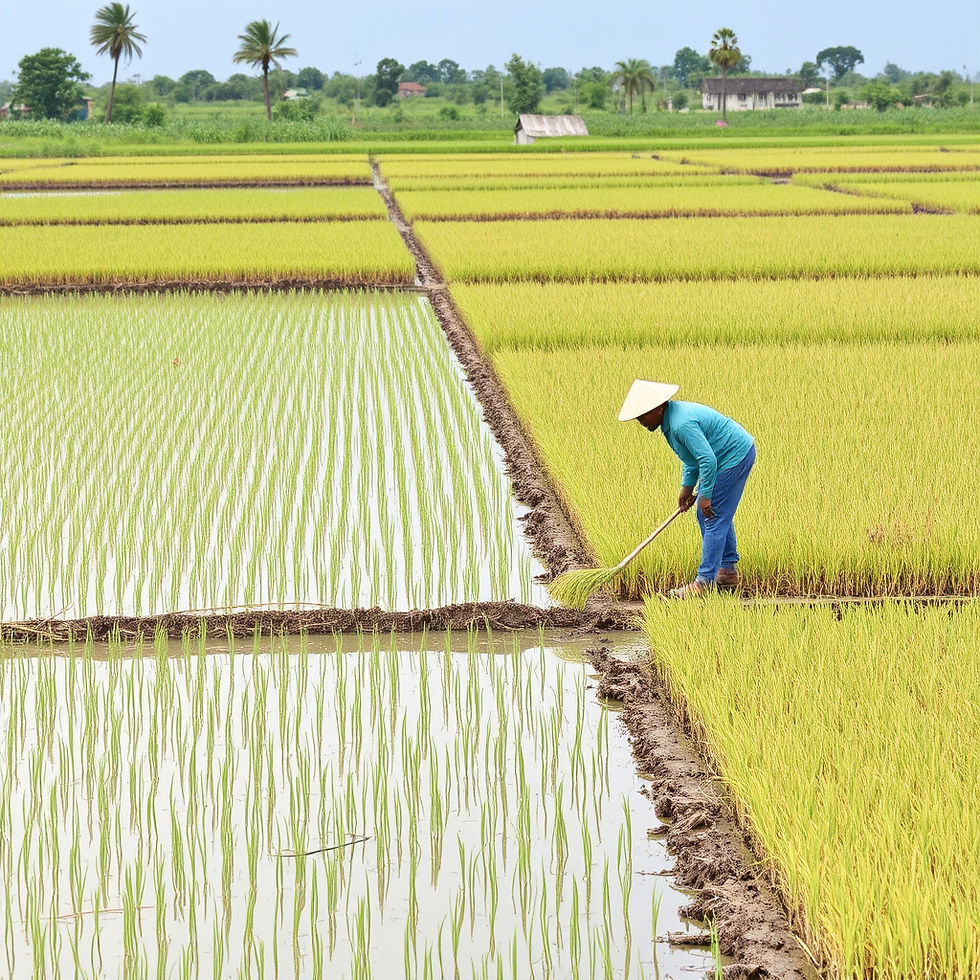
Paddy Crops: While paddy thrives in standing water, it is sensitive during the flowering and grain-filling stages. Submergence during these periods can lead to "empty grains" and significant yield loss.
Vegetable Crops: Crops like chilies, onions, and leafy greens are highly vulnerable. Even 24 to 48 hours of total saturation can lead to irreversible wilting and death, leading to immediate financial shocks for smallholder farmers.
The Variables: Soil Drainage, Rainfall, and Design
Why does one field flood while the neighbor stays dry?
Soil Drainage Patterns: Clay-heavy soils (common in many dry zone districts) retain water longer than sandy soils. Once saturated, clay expands, effectively sealing off drainage.
Rainfall Intensity: It isn't just about how much it rains, but how fast. High-intensity bursts lead to surface runoff and "flash waterlogging," where the soil cannot absorb water fast enough.
Field Design: Traditional flat-bed planting is highly susceptible. Modern techniques like raised beds or improved bund management are essential to guide water away from sensitive root zones.
How CYOL Bridges the Gap: Data-Driven Water Management

At Cyol, we believe that you cannot manage what you do not measure. We leverage technology to give farmers a "head start" against the elements through three core pillars:
Real-Time Rainfall Data: Our systems track localized precipitation levels, allowing us to predict when soil is reaching its saturation breaking point before the flooding even begins.
Field Water Level Monitoring: Using IoT sensors, we monitor the actual height of water within the fields. This provides a precise view of drainage efficiency.
Intelligent Risk Alerts: When our algorithms detect a combination of high soil moisture and forecasted heavy rain, we send localized alerts to farmers.
The Importance of Early Drainage Action
The most critical takeaway for modern agriculture is that drainage is just as important as irrigation. Once waterlogging signs like yellowing appear, the damage is already underway.
By using data to trigger "early drainage action"—such as clearing peripheral drains or activating pumping systems before the peak of a storm—farmers can mitigate the "suffocation" of their crops. In an era of climate volatility, being proactive is the only way to ensure that our fields remain resilient, productive, and dry.



Comments